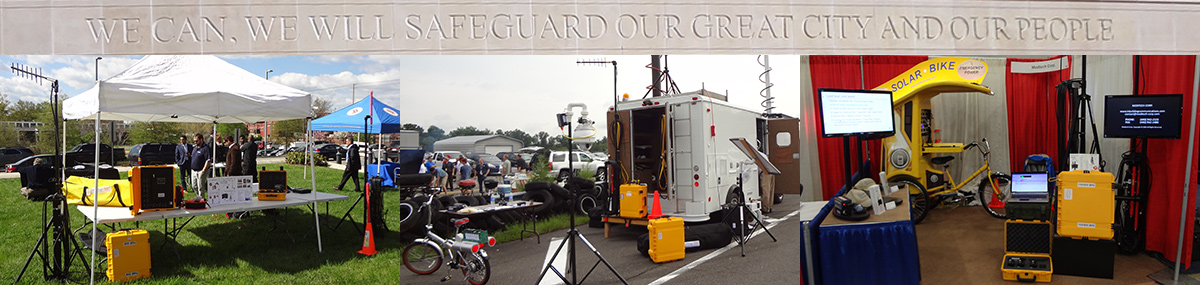
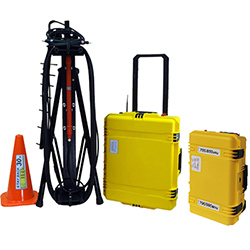
The portable SIPS-BDA system addresses the NFPA new Annex O requirements
providing in-building communications for public safety radio
at 1/10th to 1/100th the cost of prevailing fixed system or added-tower solutions.
It represents an original, creative and new approach to enhance the safety of the public,
firefighters, and multi-agency personnel. SIPS-BDA supports most statewide communications interoperability
plans (e.g. OH-SCIP).
There are many advantages associated with both the "deployable system" strategy and the
advanced SIPS platform implementation of the SIPS-BDA products. Many of these advantages
are discussed in our application note Portable In-Building Communications System.
As stated by DHS and FEMA:
" The National Preparedness Guidelines are an all-hazards vision regarding the nation's four core preparedness objectives: prevent, protect, respond, and recover from both terrorist attacks and catastrophic natural disasters."
Our portable standalone SIPS-BDA system achieves these core preparedness objectives and is
aligned with the national investment strategy. It is also a long-awaited solution for
first responders nationwide faced with in-building communications challenges.
For example, the Phoenix Fire Department's
"Radio System Safety Project Final
Report", October 2004, identifies several problems associated with fixed
equipment for in-building communications enhancement:
"Buildings that do not have interior coverage must be identified and have communications
equipment installed. The cost of identifying and treating all affected buildings is cost
prohibitive. Also, while this equipment provides communications in a normal environment
it may not survive the high temperatures during a fire."
The authors of the Phoenix FD report further cite:
"Structural failures and firefighting actions themselves may also render these systems unusable."
The SIPS-BDA systems overcome these difficulties. First, SIPS is an "ON-DEMAND
DROP-AND-OPERATE" technology. This means SIPS systems are easily deployed to any building
on a per event basis thus eliminating the costly step of identifying the communications
requirements of each and every building in advance.
Secondly, the SIPS-BDA system arrives with the first responders and is not subjected to or
damaged by events in the building leading up to that arrival. Once on site, responders
can assess the conditions and position the SIPS unit to maximize survivability. SIPS watertight
enclosure will protect it from water damage throughout the event.
SIPS-BDA products address key elements under discussion in national level in-building
code initiatives including watertight enclosures to prevent damage from wash-downs and a
minimum of 12 hours of battery-backed operation. Monitoring for fault conditions and alarm
generation are included.
There are now five (5) members in the SIPS-BDA family. They are aggressively priced,
rugged, expandable systems ready to address 800 MHz in-building communications challenges
wherever and whenever operations go down. Product specifications, pricing, and other
information are available through the additional material links at the top of the page.
|